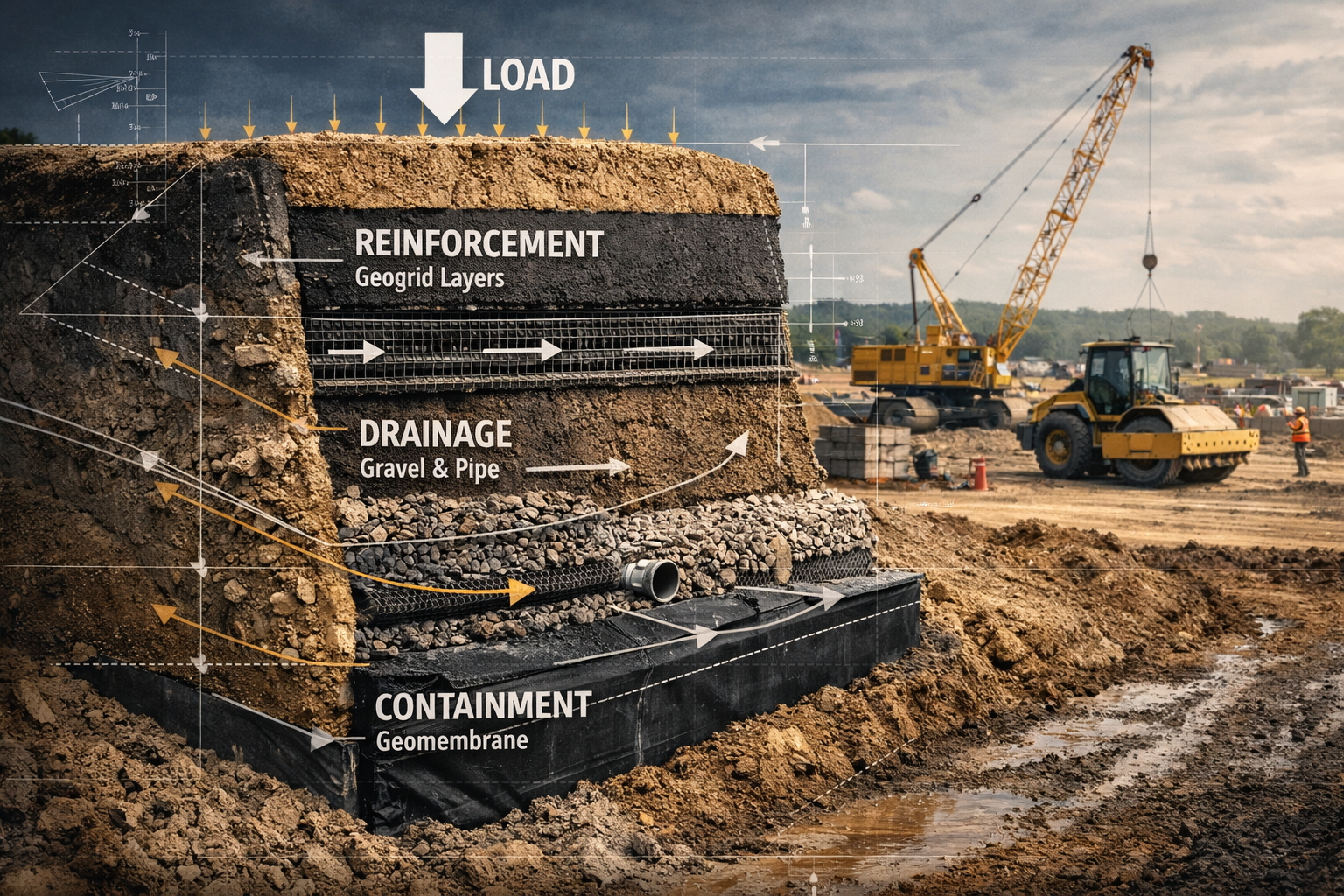
TechnoBris™ structures geosynthetic systems through documented engineering logic — integrating soil mechanics, load transfer behavior, hydraulic regulation, and exposure risk modeling into accountable infrastructure configurations. Material selection is secondary to system architecture.
Each engineered configuration is derived from geotechnical interaction modeling — evaluating shear transfer, confinement behavior, pore pressure pathways, and long-term deformation response.
System documentation defines boundary conditions, design assumptions, validation references, and lifecycle exposure thresholds to ensure traceable engineering accountability.
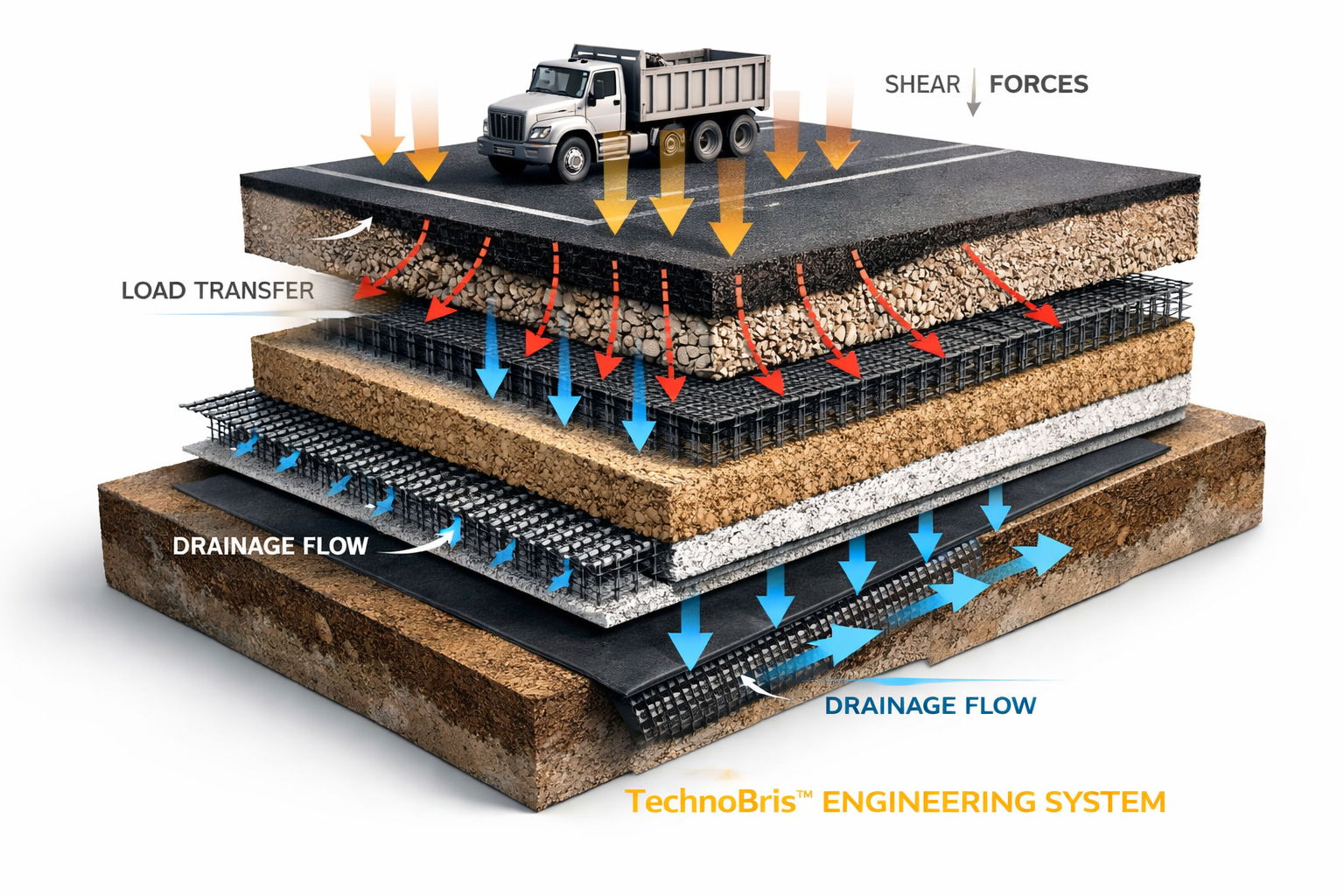
Shear interaction and stress distribution control.
Seepage moderation and pore pressure relief.
Barrier continuity and environmental isolation.
Layer interaction and durability alignment.
Performance validation across decades of service.
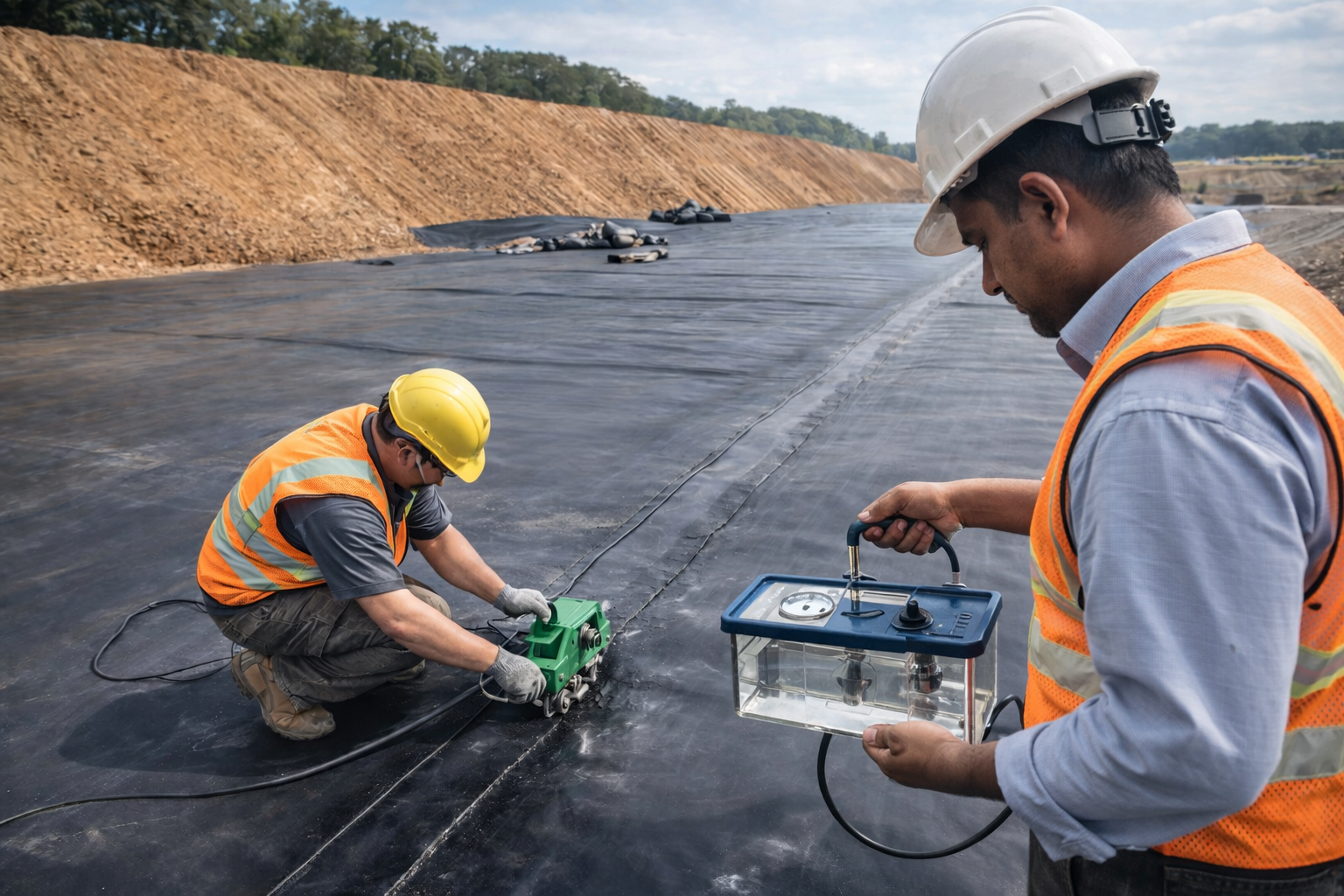
System domains are defined by dominant failure mechanisms — settlement, lateral displacement, hydraulic erosion, containment breach, or cyclic loading instability.
Each category operates under a standardized configuration framework aligned with soil classification, load intensity, exposure duration, and regulatory compliance requirements.
Reinforced mattress systems, settlement control, and high-load stabilization platforms.
Subgrade improvement, rutting mitigation, and formation stability systems.
Stability enhancement and erosion-resistant embankment reinforcement systems.
Scour resistance, toe protection, and hydraulic erosion mitigation systems.
Subsurface drainage networks and pore pressure control infrastructure systems.
Barrier liner systems, leachate management, and environmental isolation frameworks.
Canal lining, seepage reduction, and irrigation performance control systems.
Load platforms, renewable foundations, and critical infrastructure stabilization systems.
Expansive soils, marine clay, flood-prone and seismic resilience systems.
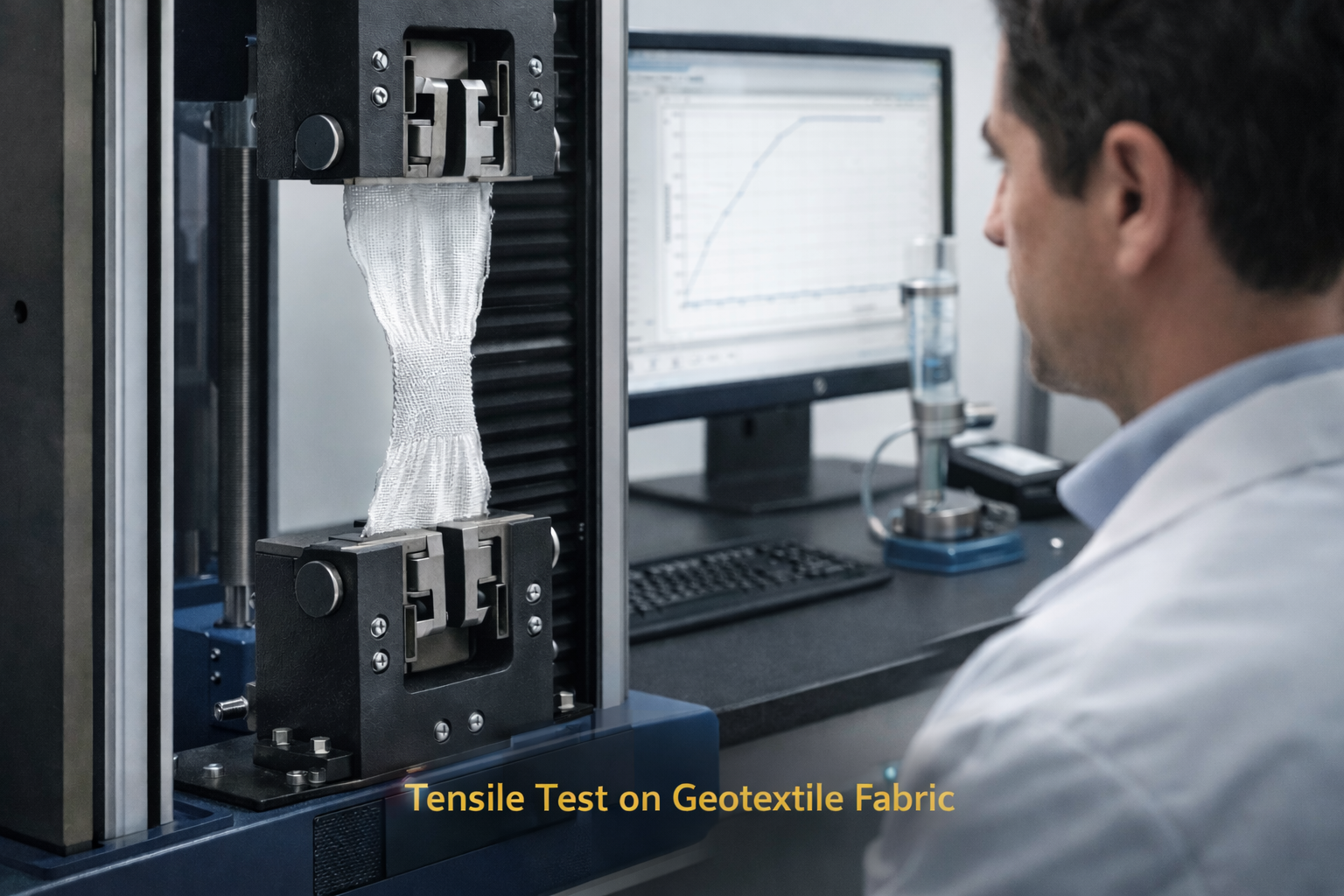
System recommendations reference globally recognized geosynthetic testing standards and geotechnical performance criteria — ensuring tensile capacity, hydraulic transmissivity, seam integrity, and durability resistance are validated under defined exposure conditions.
Validation logic aligns laboratory data, field installation controls, and sector-specific regulatory frameworks into a unified performance governance model.
Structured quality, environmental, and safety management systems.
Standardized tensile, filtration, hydraulic, and durability validation.
Compliance with Indian infrastructure regulatory frameworks.
All engineered configurations are governed through a centralized technical authority — preserving consistency in design logic, validation criteria, and documentation integrity.
External collaboration, material integration, and execution support align with controlled engineering intent to eliminate ambiguity and reduce lifecycle risk exposure.
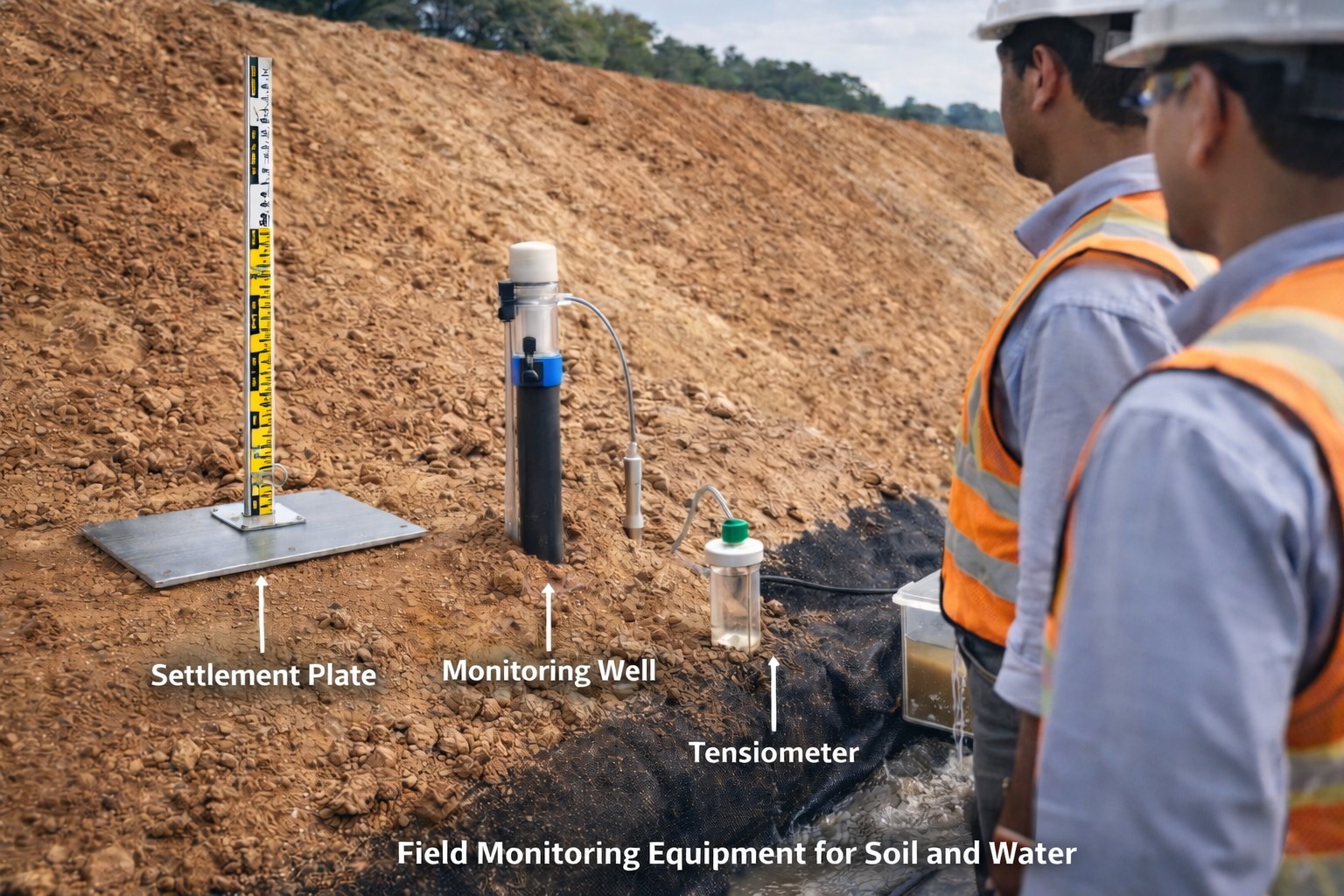
Defined scope, documented assumptions, and traceable system logic.
Laboratory, field, and regulatory verification alignment.
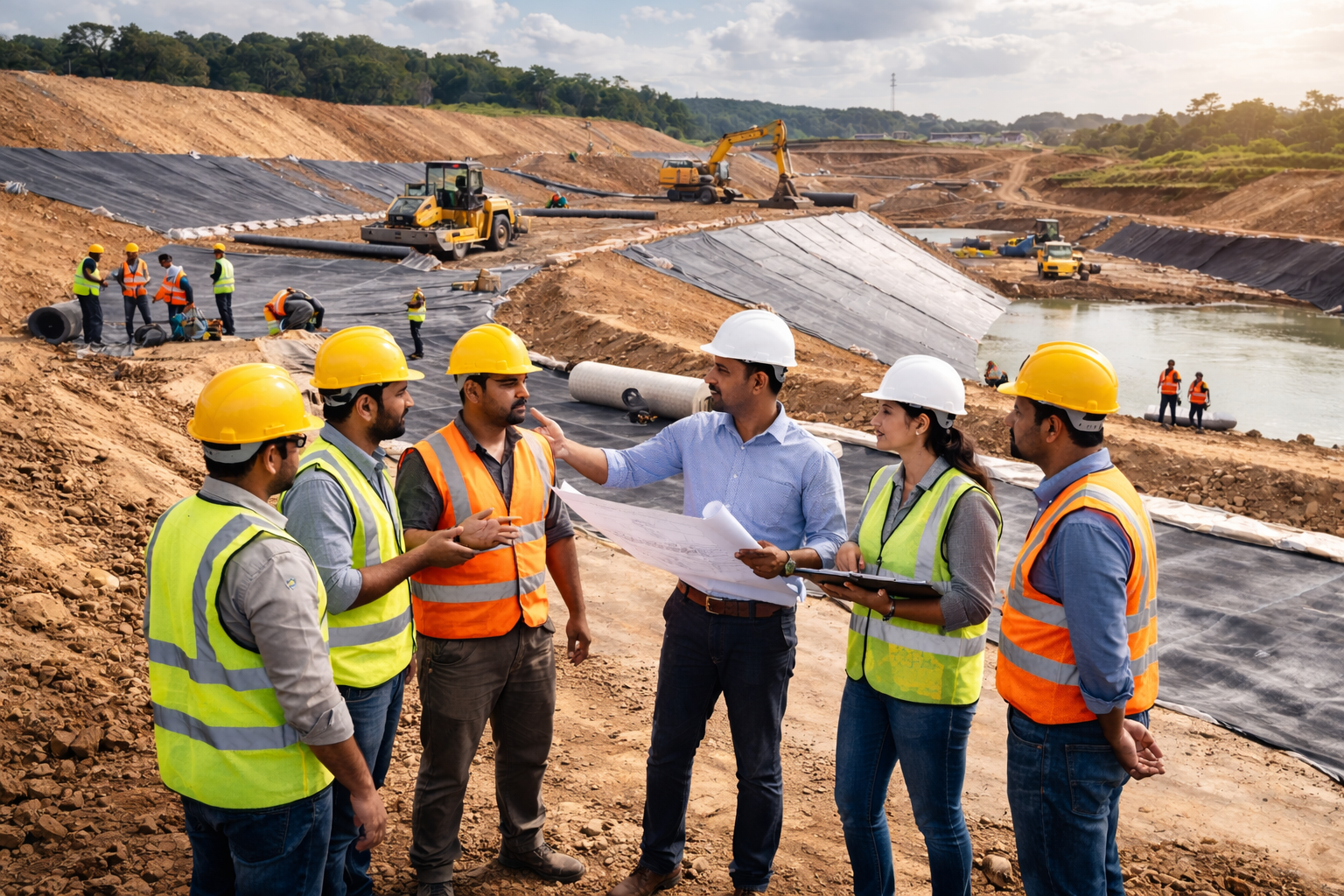
TechnoBris™ operates as a system architect — accountable for structural clarity, exposure evaluation, and long-term infrastructure performance beyond initial construction milestones.
Engineering responsibility extends through documentation discipline, validation governance, and lifecycle durability assurance — not material supply alone.